Structured content helps you plan, deliver, and verify information consistently - and makes handover packs and audits far easier.
If you cannot quickly find what you need, documents and requirements slow down reviews, approvals, and delivery. These search options help you locate text, scope rows, and projects faster.
How to Search in Plannerly
This guide explains how to search in Docs and Scope, across a whole project, and on your Projects page.
Searching in Docs
The Docs module has a built-in search. It looks through section titles and text, including sections that are closed.
Step 1 - Open Search
Click Search in the Docs toolbar, or press Ctrl+F on Windows or Command+F on Mac. In Docs, these keys open Plannerly's search instead of your browser's.
Step 2 - Type what you want to find
Type the word or phrase you want to find. Plannerly shows only the sections that match, opens them and highlights each match. Press Enter for the next match, or Shift+Enter to go back.
Click Options to search All documents in the project, to use Match case or Match whole word, or to look in one section type only.
If your role has the Manage Documents permission, you can also use Find and replace. A bulk replace can't be undone in one step: each section has to be undone on its own.
If you regularly search for repeated project details (project name, client name, document version, dates, and more), consider using SmartFields in your templates. SmartFields automatically populate key information so you do not have to hunt and update it manually.
Searching in Scope
The Scope module includes a built-in search.
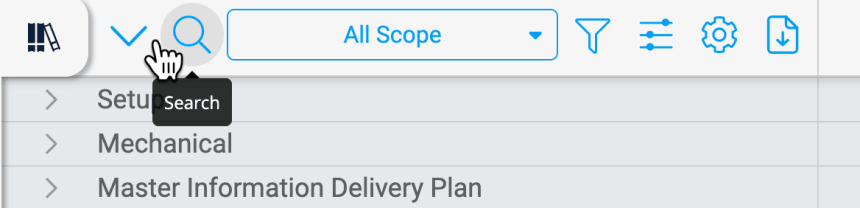
- Click Search in the Scope toolbar.
- This search covers: element names, subtitles, entity types, codes, and information requirement names.
- Your results open in a panel. Click one to jump to that row.
Note: This option searches through the folders and rows list to the left of the grid.
Searching a Whole Project
To search a whole project at once, click Search in the left menu, or press Ctrl+K on Windows or Command+K on Mac.
Type at least two letters. Search this project looks through the document sections, tasks, information requirements, checklist items and files you can see. Click a result to go straight to it.
Searching for Projects
From your Projects page, you can search directly for projects.
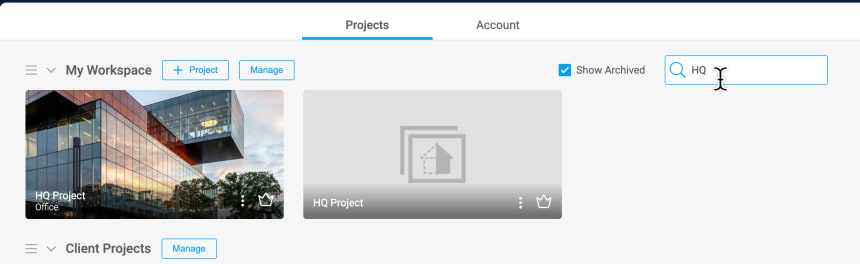
Type the project name in the Search projects box to quickly locate the project you need. It also matches the project type.
Summary
- Docs: Click Search or press Ctrl+F / Command+F.
- Scope: Use Search in the toolbar to find rows, folders, codes, and information requirements.
- Whole project: Click Search in the left menu or press Ctrl+K / Command+K.
- Projects page: Use Search projects to find projects by name.
Related Articles
- What are SmartFields (and why you will love them)
- Creating and Structuring Documents
- Creating and Structuring Scope
FAQs
Why does browser search not find my text in Docs?
Browser search can only find text that is currently visible on the page, so it misses closed sections. In Docs, Ctrl+F or Command+F opens Plannerly's own Search instead, which finds text in closed sections too.
Does Scope search include information requirements?
Yes. Scope search includes information requirement names, along with element names, types, subtitles, and codes.
What is the fastest way to avoid repetitive edits in Docs?
Use SmartFields in templates to automatically populate common details, reducing the need to search and update content manually.