
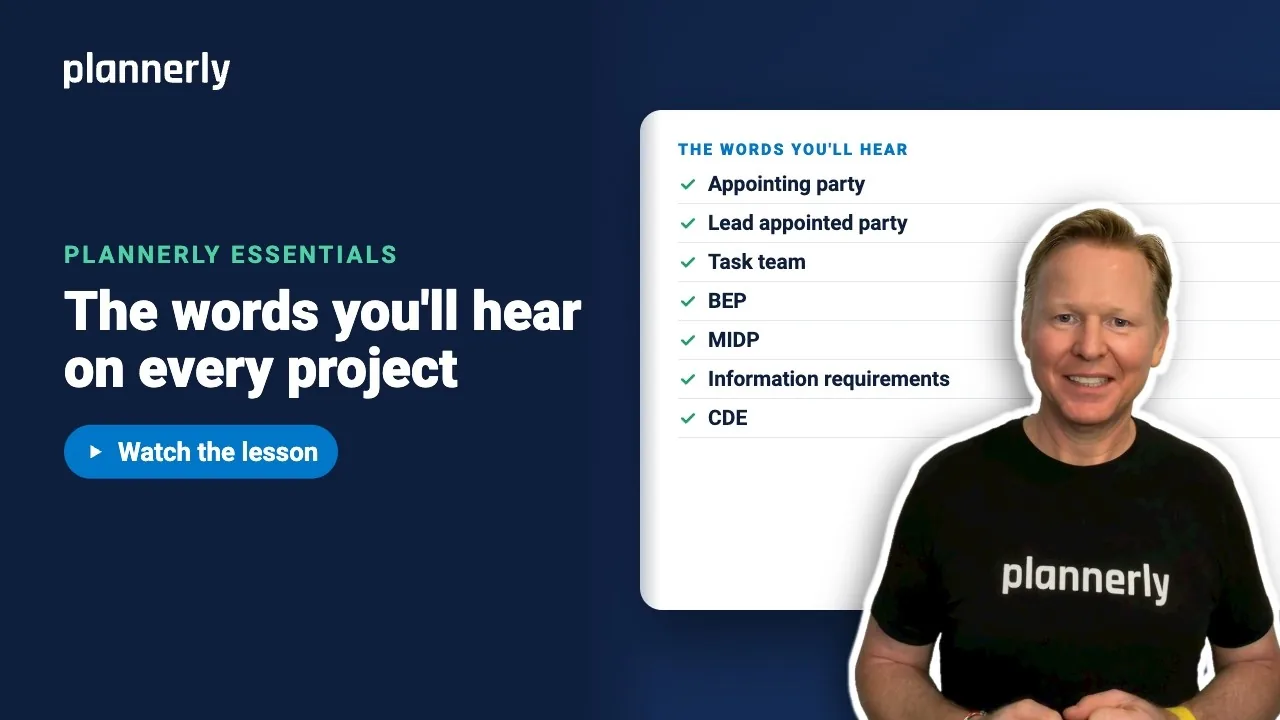
TL;DR - The appointing party is the client (the owner, in the US). The lead appointed party is the firm they appoint to deliver, and task teams do the work. The BEP, MIDP and information requirements say what is delivered, by whom and when, and the CDE is where it is all shared.
Who this is for
Anyone who has just joined a project, whatever your role: Viewer, Editor or Manager. You do not need a permission to read this, and you do not need to know ISO 19650 first.
Why it matters
Project teams use a small set of words again and again, and they come from the international standard ISO 19650. If you know what they mean, project emails, meetings and Plannerly itself make much more sense, and you can ask better questions.
Who is who
What is an appointing party?
The appointing party is the client: the person or organisation that needs the information and pays for the work. In the US you will usually hear owner. They decide what information they need, and when.
What is a lead appointed party?
The lead appointed party is the firm the client appoints to deliver the information for the whole project. It is often the main contractor (the general contractor in the US) or the lead designer. It gathers what every team produces and passes it on.
What is the difference between an appointing party and an appointed party?
The appointing party asks for the information and appoints. An appointed party is anyone who is appointed to deliver it. The one that leads all the others is the lead appointed party.
What is a task team?
A task team is a group doing a piece of the work: for example the architects, the structural engineers or a trade contractor. Each task team delivers its own information to the lead appointed party.
The plans and requirements
What is a BEP?
BEP stands for BIM Execution Plan. It is the document where the team agrees how it will deliver the information: who does what, with which tools and standards. In Plannerly you write it together in Docs. Some countries use another abbreviation for the same thing; see the Help Center guide on BEP, BAP, PEB and PGI.
What is a MIDP?
MIDP stands for Master Information Delivery Plan. It sets out who delivers what, and when, across the whole project. It is built from each task team's own delivery plan (a TIDP). In Plannerly the work and its dates are planned in Scope.
What are information requirements?
Information requirements say exactly what each deliverable has to contain. You may see them under other names: EIR (Exchange Information Requirements, from the client to the project team), AIR (Asset Information Requirements) and others. Whatever the name, the question is the same: what must this information include?
What is a CDE?
CDE stands for common data environment. It is the one agreed place where project information is shared, reviewed and approved, so everyone works from the same version. Plannerly can act as your CDE.

If it doesn't work
I think my project uses a different word
Projects sometimes use local names. The US says owner for appointing party and general contractor for the lead contractor. Some countries abbreviate the BEP differently (BAP, PEB, PGI). If a word is still unclear, ask the project's information manager or the person who invited you.
I cannot find these things in Plannerly
You only see the areas your project uses and your role allows. Docs, Scope, Verify and File Manager appear down the left side of the project. If one is missing, ask a project manager whether the project uses it and whether your access includes it.
Common questions
What is a lead appointed party?
The firm the client appoints to deliver the project's information. It is often the main contractor (general contractor in the US) or the lead designer, and it brings together what every task team produces.
Is the appointing party always the client?
Yes, in ISO 19650 terms the appointing party is the client: the organisation that commissions the work and defines the information it needs. In the US the same role is usually called the owner.
What does MIDP stand for in BIM?
Master Information Delivery Plan. It lists who delivers which information, and when, across the whole project.
What is the difference between a BEP and a MIDP?
The BEP says how the team will deliver the information: the approach, standards and responsibilities. The MIDP says who delivers which pieces, and when.
Do I need ISO 19650 training to use Plannerly?
No. You can take part in a project knowing only these words. If you want to go deeper, Plannerly has free ISO 19650 training.
Related
- Find your project and your way around it - the next lesson.
- What is an appointing party in ISO 19650?
- BEP, BAP, PEB, PGI: BIM execution plan abbreviations around the world
- How to create a MIDP in Plannerly
- Using Plannerly as a common data environment (CDE)
- ISO 19650-1:2018 on iso.org
Take the free Plannerly Essentials course - every lesson is a short video like this one, with a certificate when you finish.